
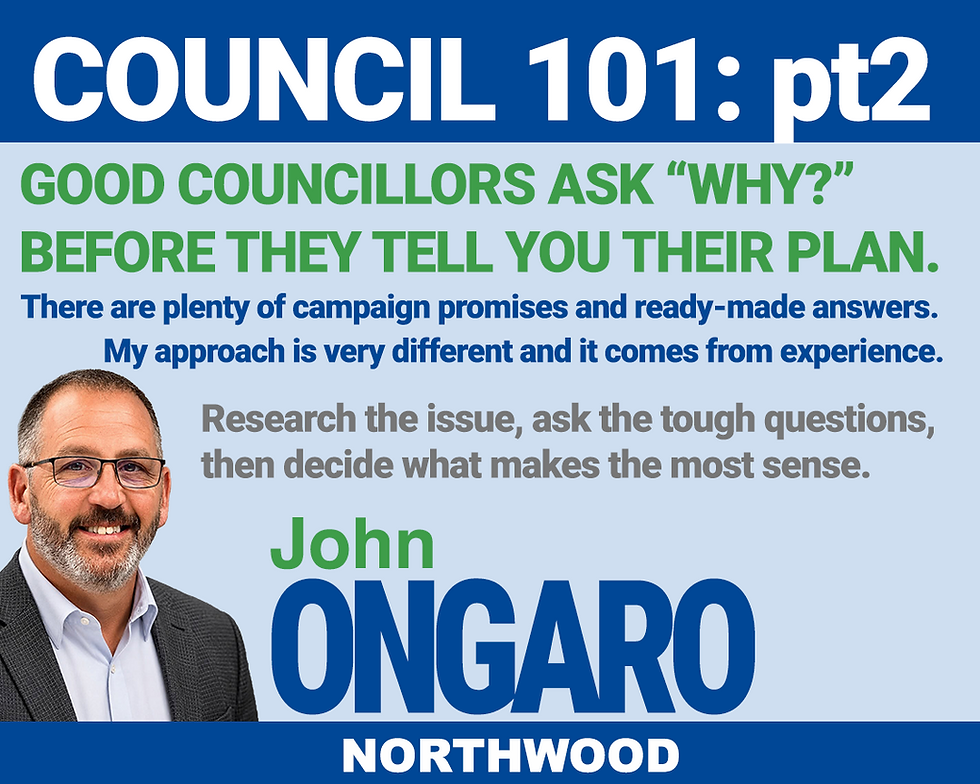
We need to raise the standard on Council, and it starts with working together.

Thunder Bay’s next council will face some of the biggest decisions the city has made in years. John Ongaro believes meeting those challenges will require more than different voices around the council table , it will require a better culture of collaboration, clearer decision-making and a willingness to put personalities aside. After years of closely following council, he explains why raising the standard inside council chambers is essential to moving Thunder Bay forward.
For the past several years, I have spent a lot of Monday nights (and since the change, Tuesday nights) watching Thunder Bay City Council. Through my editorials, I have followed the debates, read the reports, watched the votes and, perhaps most importantly, watched how council works. There are good people around that table who care deeply about Thunder Bay. There are councillors who do their homework, ask difficult questions and genuinely want to make this city better. But watching council as closely as I have has also convinced me of something else: we can raise the standard of how council works together. And I believe we have to.
Thunder Bay is entering a period when some very significant decisions will have to be made. Infrastructure, roads, housing, homelessness, public safety, economic development and the affordability of municipal government are all going to demand serious attention. Those challenges require more than 13 individually elected people sitting around the same table. They require people who can work as a team.
I don't expect councillors to agree with each other. In fact, I would be concerned if they did. Council needs debate. Administration needs to be challenged. Councillors are elected to ask questions, represent their constituents and occasionally say, "I don't think this is the right approach." But disagreement and dysfunction are two very different things, and we've seen examples during this term where the line between the two has become increasingly difficult to ignore.
The temporary shelter village is perhaps the clearest example. Council considered locations, made decisions, reconsidered them and changed direction. Administration was sent back to do more work. Notices of motion were introduced and previously approved directions were revisited. Whether someone supports or opposes the temporary village isn't my point. My concern is what that process tells us about how we make decisions. Every time council changes direction, administration has to change direction too. Staff time is consumed, reports are rewritten, financial and legal implications have to be reconsidered and community expectations change. Most importantly, residents begin wondering whether City Hall actually knows where it is going.
There will absolutely be occasions when new information requires council to reconsider a decision. That's responsible government. Changing your mind isn't necessarily a weakness; sometimes it demonstrates that you're listening. But continually reopening difficult decisions can become a substitute for making them. Council needs to ask the tough questions, have the debate, understand the consequences and then be prepared to make a decision and move forward.
I also believe there has been a disconnect at times between council and administration. That doesn't mean administration is always right. It isn't, nor should councillors simply accept every recommendation placed in front of them. Administration's responsibility is to give council its best professional advice. Council's responsibility is to question that advice, challenge assumptions, listen to residents and ultimately make the decision. Those are different roles, but they shouldn't be adversarial ones. Council needs to give administration clear direction and then hold it accountable for delivering results.
There is another aspect of council I've watched over the years that I know isn't my style: the grandstanding, personal attacks and moments when frustration turns into lashing out at someone who disagrees. We've seen occasions where a question becomes a speech, where disagreement becomes personal or where the performance seems more important than the substance of the issue. Some of the people involved in those exchanges may be back around the council table next term. I may disagree strongly with them on some issues, but my response isn't going to be to shout louder. That's not the kind of councillor I want to be, and it's not the kind of council culture I think Thunder Bay needs.
Passion is important. These decisions affect real people and councillors should care deeply about them. But leadership is also knowing how to disagree. It is possible to tell another councillor that you believe they're wrong and still respect them. It is possible to challenge the City Manager or administration without attacking the individual. And it is possible to lose a vote without treating the people on the other side as the enemy.
If I am fortunate enough to represent Northwood, there will be nights when I disagree strongly with other councillors. There will be recommendations from administration I won't support, motions I bring forward that other councillors reject and votes that I lose. That's democracy. But after the vote is over, we still have a city to run together. If another councillor has a good idea for Current River, McIntyre, Red River or Neebing, I want to help make it happen if it benefits Thunder Bay. I would expect the same when I'm fighting for something Northwood needs.
Working together doesn't mean having 13 councillors who think alike. I want councillors who challenge each other, strong ward representatives, people who question spending and people willing to challenge administration when something doesn't make sense. But I also want 13 people who understand that governing a city is ultimately a collective responsibility. Sometimes that requires compromise. Sometimes it means putting your ego aside and recognizing that somebody else had the better idea.
Thunder Bay has tremendous opportunities ahead of it, but we also have significant challenges. We have an infrastructure deficit that cannot be ignored. We need housing, better roads, thoughtful solutions to homelessness, stronger public safety and responsible management of taxpayers' money. Those issues are difficult enough without making them harder through unnecessary division.
The next council doesn't need more theatre. It needs more teamwork. It needs councillors who come prepared, ask good questions, listen to administration, listen to residents and listen to each other. It needs people willing to make difficult decisions and, once those decisions are made, work together to move Thunder Bay forward.
That's the kind of councillor I want to be. I don't want to spend four years fighting the people sitting beside me. I want to spend four years working with them. The measure of success shouldn't be who won the argument on Monday night. It should be whether Thunder Bay is a better city four years later.
And I believe raising the standard of how we work together is a good place to start.


John, unfortunately you are not in my ward or you would have 2 votes to your credit. In saying this and for anyone reading my comment, your City Council Roundup was probably the best thing that happened to my household. Your straightforward approach in explaining municipal policy and procedures and deciphering City Council meetings enhanced both my understanding as well as that of my wife’s . It has made us more knowledgeable as to the issues and the questions necessary to be asked as the election approaches. Good luck in your campaign. p.s. As I know a number of folks in Northwood, I have taken the liberty to enlighten them as to what you stand for. ✌️